The U.S. Treasury caught bond markets off guard on Wednesday by announcing it will at least double the size of its buyback operations for long-dated government debt. The move came just two weeks after publishing its scheduled quarterly plan. It targets 10-to-30-year Treasuries, which have been under heavy selling pressure since late June, and sent yields sharply lower. Traders should understand what this actually is and what it is not.
U.S. Treasury Long-End Buybacks: Key Takeaways
- Buyback cap doubled: Maximum per-operation size for the 10-to-20-year and 20-to-30-year sectors rises from $2 billion to at least $4 billion, effective September 9, 2026
- Duration: The increase runs through the end of the current refunding quarter, November 4, 2026, when Treasury will reassess
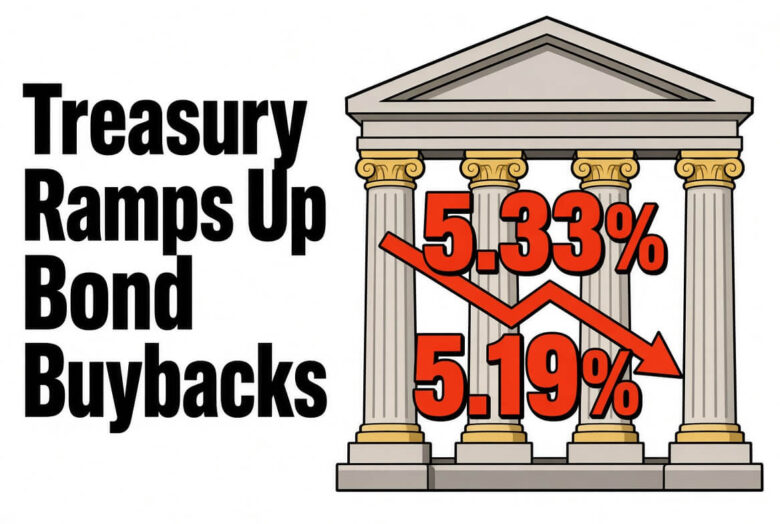
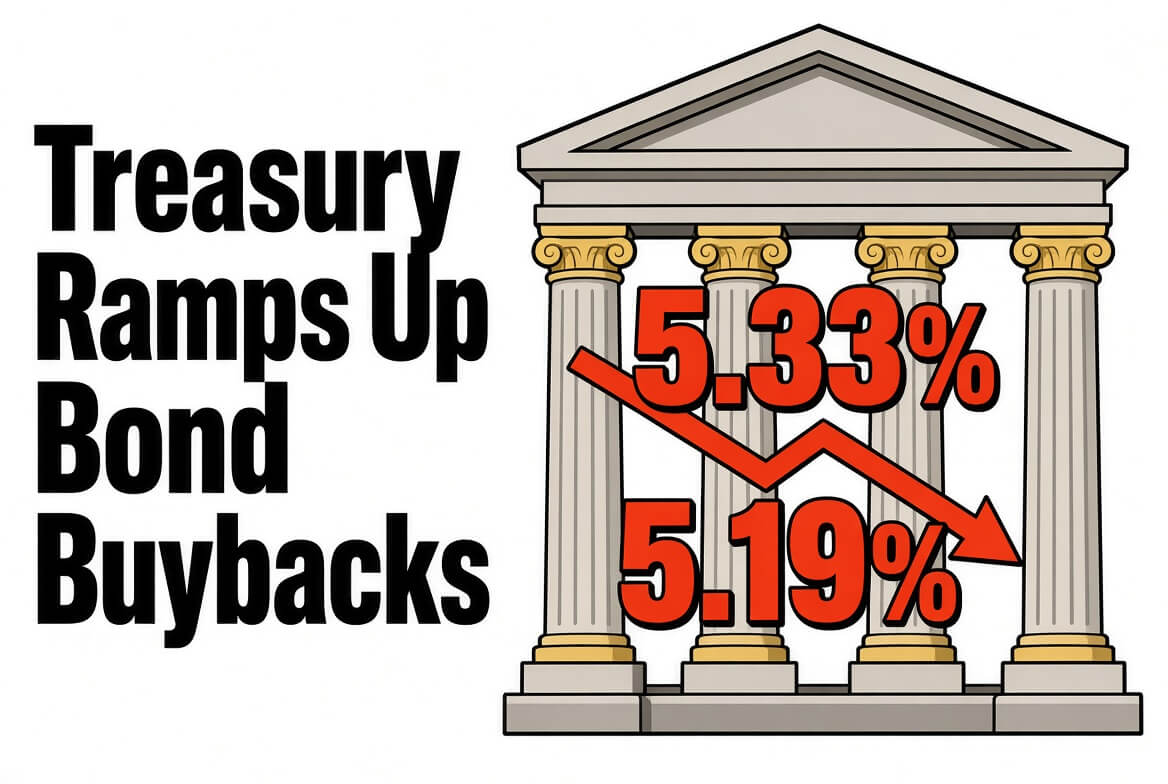
- 30-year yield reaction: The 30-year Treasury yield dropped nearly 9 basis points to 5.196% following the announcement, after hitting a 19-year high of 5.33% the prior session
- 10-year yield reaction: The 10-year note fell 6 basis points to 4.647%
- Off-schedule move: A mid-quarter change to buyback sizes is uncommon, signaling the Treasury saw the long-end selloff as serious enough to act immediately
- Not a debt paydown: Treasury buys older bonds and replaces them with new ones. Total government debt does not shrink
Promoted: How Do Professionals Trade a Bond Market Shock?
Today’s Treasury intervention sent yields skidding and dollar pairs whipping. You read the headlines. Now see how institutional FX desks actually trade this kind of macro volatility. Brent Donnelly’s “The Art of Currency Trading” (4.7 stars & 517 reviews on Amazon) bridges the gap between the news you read and the execution on your screen. It’s a practical, no-fluff guide to how professional FX desks navigate the exact type of yield-driven volatility described in today’s report.
Learn more about “The Art of Currency Trading” at Amazon
Disclosure: We may earn a commission from our partners if you sign up through our links, at no extra cost to you.
What Is a Treasury Buyback?
A Treasury buyback is when the U.S. government repurchases its own older bonds from the market before they mature. Think of it like a company buying back its own stock, except here the goal is not to return cash to shareholders. The goal is to improve liquidity, meaning how easily traders can buy and sell bonds without moving the price against themselves.
The bonds Treasury is buying belong to a category known as off-the-run securities. Once Treasury auctions a new bond, the previous issue trades less frequently. Dealers avoid holding large positions in those older bonds because they are hard to sell quickly. That pushes bid-ask spreads wider and raises borrowing costs for everyone. Treasury’s buybacks pull those older bonds off dealer balance sheets, making the market cleaner and easier to trade.
This is not a debt paydown. Treasury buys back older long-dated bonds and continues issuing new ones at auction. As Peter Boockvar of One Point BFG Wealth Partners noted after the announcement, the total outstanding debt does not shrink. The maturity structure gets rearranged, not reduced.
Why Did Treasury Act, and Why Did the Market React So Sharply?
The 30-year Treasury yield hit 5.33% on Tuesday, its highest level since 2007. The long end of the yield curve has been in a buyers’ strike since late June, with three pressures piling on at once.
First, the term premium has been rising. The term premium is the extra yield investors demand for locking up money in a 30-year bond instead of rolling short-term bills. Investors who lose confidence in the long-term fiscal picture charge more to hold duration. Second, AI-driven corporate bond issuance has flooded the market with competing supply. Estimates put AI-related dollar-denominated bond issuance at up to $1.5 trillion this year. Third, the ongoing Iran conflict has kept energy prices elevated, feeding inflation expectations and muddying the Federal Reserve’s path to rate cuts.
The timing surprised markets. Treasury published its quarterly buyback schedule just two weeks ago. Mid-quarter changes are rare. Secretary Scott Bessent’s department viewed the long-end liquidity breakdown as serious enough to act before the next scheduled quarterly refunding on November 4.
The U.S. Dollar and FX Traders: How to Read This Move
Falling long-term yields are USD-negative in theory. Lower yields reduce the return on holding U.S. dollar-denominated assets relative to alternatives, cutting the dollar’s interest rate appeal. Equity futures rose sharply after the announcement as risk appetite returned.
The more nuanced read: this move does not change the Federal Reserve’s rate path. The Fed targets the short end of the yield curve with its policy rate, currently on hold. Treasury’s buyback program targets the long end and is a debt management tool, not monetary policy. Rate expectations still depend on inflation data and economic growth, not Treasury’s buyback calendar.
Watch how the 30-year yield behaves from here. A drift back toward 5.30% despite Treasury’s support would signal that structural pressures are overwhelming the buyback. A sustained drop below 5.10% would suggest the intervention is holding. Each scenario carries different implications for USD pairs and interest-rate-sensitive currencies like JPY and CHF.
Does This Fix the U.S. Fiscal Problem?
No. Long-term yields surged because investors worry about the size of U.S. deficits and Treasury supply. The July deficit alone came in at $432 billion. Buying back older bonds does not reduce the government’s borrowing need. Treasury still issues new debt to fund spending. This program manages liquidity, not deficits.
Traditional long-end buyers like foreign central banks and pension funds have pulled back. Price-sensitive private investors have stepped in, but they demand higher yields to do so. That structural shift does not reverse because Treasury raised its buyback ceiling. The next real tests come with the next round of major auctions and the November quarterly refunding announcement.
Promoted: Is Your Small Account Holding Your Strategy Back?
Trading $100 isn’t the same as trading $100k. Emotional discipline & trading flexibility is easier when you have the right backing. FTMO is a global prop firm with a 4.8★ rating on 40K+ reviews, serving traders since 2015! No time limits. Free trials. Up to $200K in Demo Capital.
Start a free trial with FTMO!
Disclosure: To help support our content, we may earn a commission from our partners if you sign up through our links, at no extra cost to you.
Frequently Asked Questions About U.S. Treasury Buybacks
What is a Treasury buyback?
A Treasury buyback is when the U.S. government repurchases its own outstanding bonds from the market before they mature. The goal is to improve bond market liquidity, not to reduce total government debt. Treasury buys older bonds and continues issuing new ones at scheduled auctions.
Why do Treasury buybacks affect bond yields?
Treasury buying bonds in the open market increases demand for those securities. Higher demand pushes prices up. Bond yields move in the opposite direction to prices, so yields fall. Wednesday’s announcement sent the 30-year yield down nearly 9 basis points within hours of the release.
What happened to Treasury yields on August 19, 2026?
The Treasury Department announced it would at least double its maximum buyback size for 10-to-30-year securities. Per-operation limits rise from $2 billion to at least $4 billion. The 30-year yield dropped nearly 9 basis points to 5.196%. The 10-year fell 6 basis points to 4.647%. Both had reached multi-year highs the prior session.
Does this change the Federal Reserve’s interest rate outlook?
No. Treasury buybacks are a debt management tool, not monetary policy. The Federal Reserve controls short-term interest rates through its policy rate. The buyback program targets the long end of the yield curve. The Fed’s rate path still depends on inflation data, employment, and economic growth.
What does this mean for forex traders watching the dollar?
Falling long-term yields reduce the return on dollar-denominated assets, which can weigh on USD. Risk assets and equity futures rallied on the news. The dollar’s path over coming weeks depends on whether inflation cools and how the Fed responds. Traders should also watch whether the structural forces driving long-end yields higher reassert themselves.
Today’s Treasury move is a reminder that bond markets drive currency markets. Premium members can read our lesson: How Bond Yields Affect Currency Movements, covering why yield differentials drive capital flows, how to read the Treasury yield curve, and what it means when long-end and short-end yields diverge. To understand what happens when bonds and stocks sell off together, our lesson When Stocks and Bonds Fall Together: The Doom Loop Detector explains how to spot Treasury market dysfunction before it spreads to currencies and equities. Not a Premium subscriber yet? Subscribe to BabyPips Premium to unlock both lessons and the full School of Pipsology curriculum.