
The latest US economic data has delivered another inflation surprise. Producer prices increased sharply in September, while retail sales came in above expectations. However, the underlying figures suggest that consumer spending may be losing some momentum.
US Treasury yields have also fallen despite the stronger inflation data, which is an interesting development for equity markets.
For the Nasdaq 100, the outlook remains uncertain. Higher inflation could keep monetary policy restrictive, while lower bond yields may provide some support for technology stocks.
The inflation backdrop
September’s Producer Price Index increased by 1.3% compared with the previous month, well above expectations of 0.5%. On an annual basis, producer prices rose by 6.3%, the strongest increase since December 2022.
Much of the increase came from energy prices. Gasoline prices jumped by 20.3%, while the broader energy component increased by 10.8%.
However, inflation was not limited to energy.
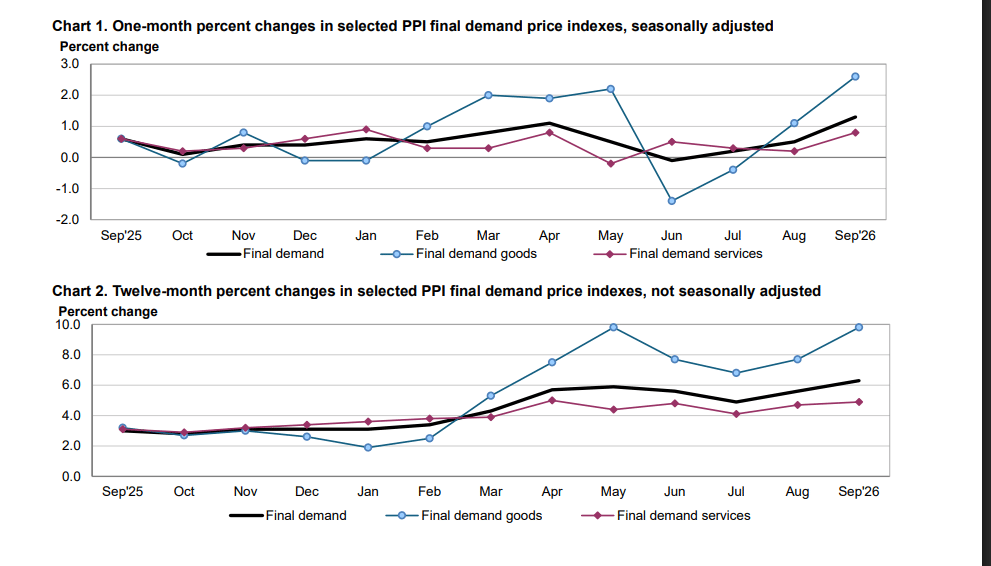
Core producer prices, excluding food and energy, rose by 0.7%, compared with expectations of 0.3%. Prices for final demand services also increased by 0.8%, with transportation and warehousing costs rising by 3.4%.
This is important for businesses, particularly those already facing higher operating expenses.
Companies may try to pass these additional costs on to consumers. However, if household demand begins to weaken, businesses could find it more difficult to raise prices without affecting sales.
This would leave some companies facing pressure on their profit margins.
The latest figures therefore suggest that inflation could remain a concern for the Federal Reserve over the coming months.
Is the US consumer still resilient?
The retail sales report was stronger than expected, at least on the surface.
Headline retail sales increased by 0.8% in September, compared with expectations of 0.3%. However, sales excluding automobiles and gasoline increased by only 0.2%.
The retail sales control group, which is used as an input when estimating goods consumption in GDP, increased by just 0.1%, below expectations of 0.3%.
This suggests that the underlying picture is less positive than the headline figure indicates.
Higher gasoline prices have contributed to stronger nominal spending. However, this does not necessarily mean that consumers are purchasing more goods.
Retail sales figures are not adjusted for inflation, making it difficult to determine how much of the increase reflects higher prices rather than stronger real demand.
On balance, the figures still point to a consumer sector that is holding up, although the weaker control group suggests that spending momentum may be moderating.
This could become more important if energy prices remain elevated and households have less money available for discretionary purchases.
What does this mean for the Fed?
The latest data presents a difficult situation for the Federal Reserve.
Inflation remains elevated, while the underlying retail sales figures suggest that some areas of consumer demand may be slowing.
This could make the path for interest rates more complicated.
The stronger producer price figures reduce the case for a rapid return to monetary easing. However, weaker consumption growth could eventually become a concern if it continues over the coming months.
One interesting development is the reaction in the US Treasury market.
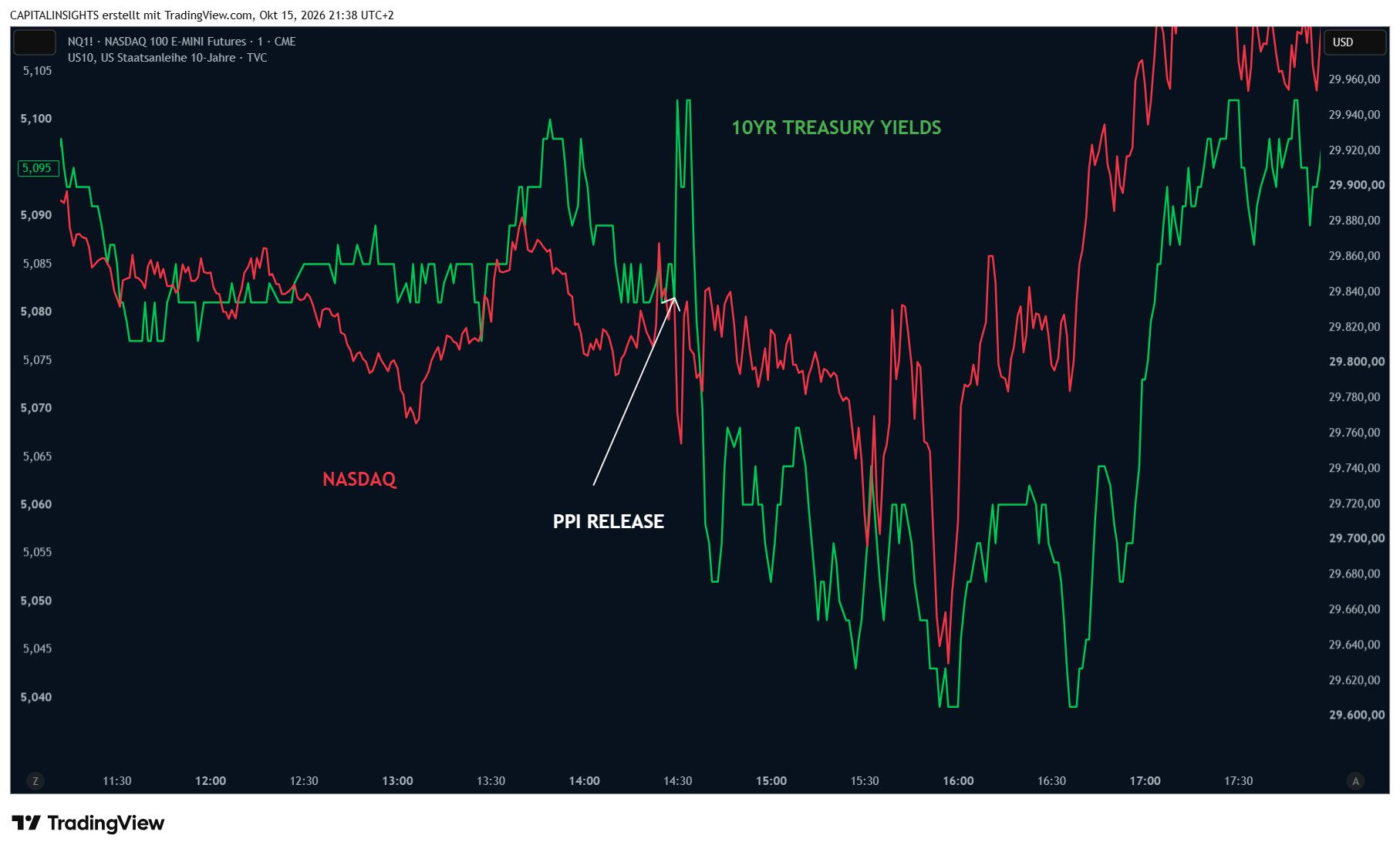
The chart illustrates the market reaction following the PPI release at 8:30 a.m. ET. What stands out is that both the Nasdaq and the US 10-year Treasury yield moved lower during parts of the session before recovering later in the afternoon. This suggests that the market was responding to more than just the inflation surprise, although the price movements alone do not establish the underlying cause.
Despite the inflation surprise, Treasury yields declined on Thursday. Under normal circumstances, stronger inflation figures would be expected to place upward pressure on yields as investors reassess future interest rates.
The latest reaction suggests that other factors are influencing bond prices.
Concerns about technology stocks and broader market risks may be increasing demand for government bonds. If investors become more defensive, Treasury yields can fall even when inflation remains elevated.
This creates a mixed picture for financial markets.
Lower bond yields could support equity valuations, but the reason behind the decline in yields is equally important.
If investors are buying Treasuries because they are concerned about growth or financial-market risks, lower yields may not necessarily lead to a sustained recovery in equities.
The Nasdaq outlook
The Nasdaq 100 has come under pressure in recent sessions, with technology and semiconductor stocks among the weaker areas of the market.
This is particularly relevant given the latest inflation figures.
Technology companies with high valuations tend to be sensitive to changes in interest rates. Higher yields can reduce the present value of expected future earnings, making investors less willing to pay elevated prices for growth.
However, falling Treasury yields could provide some short-term relief.
The question is whether this will be enough to offset concerns about technology valuations and the sustainability of future earnings growth.
Investors are also becoming more selective about the companies they hold. Businesses with strong cash flows, healthy balance sheets and reliable profitability may attract more interest than companies whose valuations depend heavily on future expectations.
This does not necessarily mean that the broader technology sector is entering a prolonged downturn.
However, it suggests that the market may be going through a period of adjustment following the strong performance of growth stocks.
Our near-term outlook for the Nasdaq remains cautiously bearish.
The recent decline in Treasury yields could support a technical recovery, particularly after the selling pressure seen in technology stocks.
However, a sustained move higher would likely require improving market breadth, more stable interest-rate expectations and renewed buying interest among the largest technology companies.
Until then, further volatility remains likely.
The market impact
The latest economic releases have left investors with several competing factors to consider.
Inflation is rising faster than expected, but the underlying retail sales figures are showing signs of moderation. Meanwhile, Treasury yields have declined despite the stronger producer price numbers.
For the US dollar, persistent inflation could provide support if markets begin to expect interest rates to remain restrictive for longer. However, lower Treasury yields and weaker risk sentiment could limit that support.
For the Nasdaq, the immediate outlook depends partly on whether lower yields can encourage investors to return to technology stocks.
On balance, we remain cautious about the sustainability of a broader equity recovery.
The US economy is still showing resilience, and the latest figures do not suggest that a sharp downturn is inevitable. Nevertheless, persistent inflation and moderating consumer spending could make the coming months more challenging for the Federal Reserve.
A stabilization in Treasury yields and renewed strength in technology stocks would improve the outlook for the Nasdaq.
For now, the combination of inflation uncertainty and weaker technology-sector momentum suggests that investors may remain cautious, even if lower bond yields provide some short-term support.