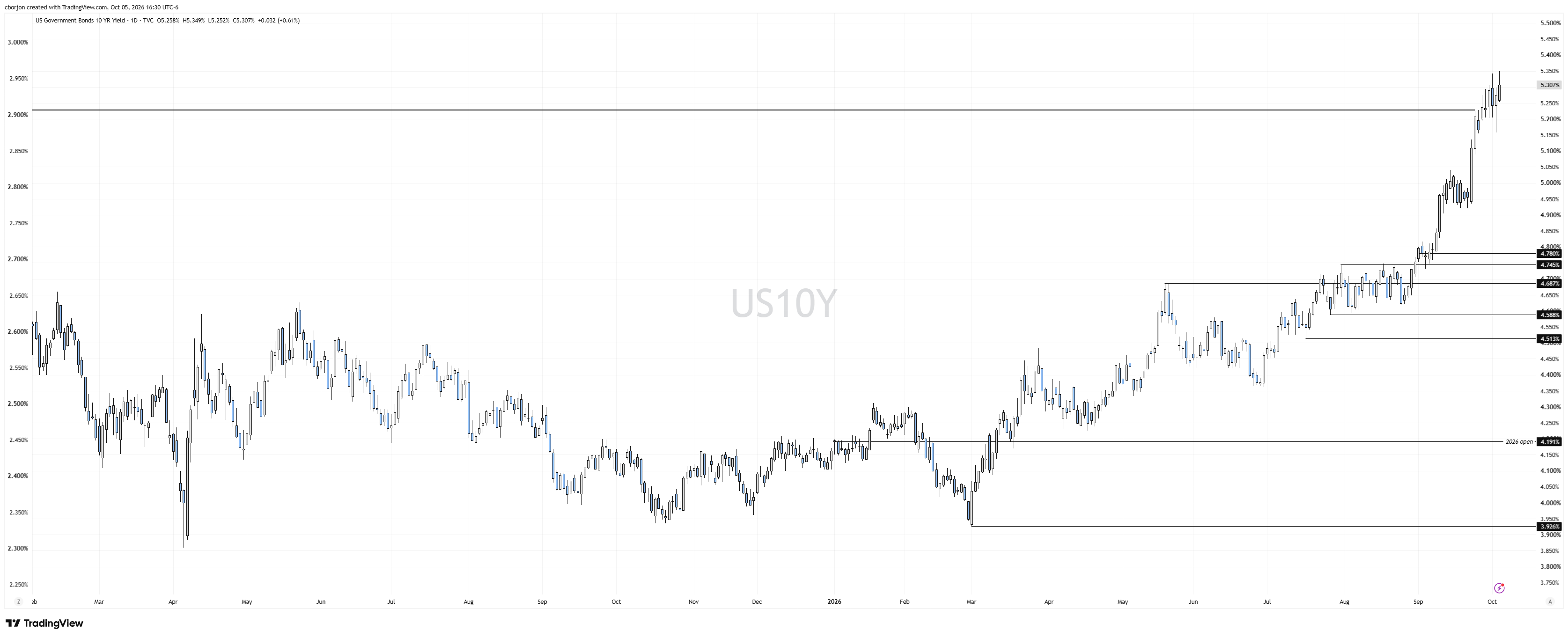
US Treasury yields edged up at the beginning of the week, with the 30- and 10-year yields reaching multi-year highs as inflation expectations rose, as shown in a US Institute for Supply Management (ISM) survey indicating that business activity in the services sector slowed while input prices surged.
Rising input prices and France’s fiscal woes push global borrowing costs higher
The US 10-year Treasury note yield gains more than 3 basis points to 5.307%, amid growing fears that high energy prices may drive global bond yields higher.
The ISM Services PMI fell below estimates of 55, edging down from 55.4 to 54.9, while new orders and employment sub-components improved, but prices paid indicate that companies are reporting higher costs.
In addition, France’s fiscal crisis sent global bond yields higher amid investors’ worries about next year’s budget.
Aside from this, in the commodity complex, West Texas Intermediate (WTI), the US Oil benchmark, fell more than 2% at $89.29 on Monday, due to the G7 agreeing to freeing over 100 million barrels of crude and diesel. This boosted supplies and eased pressure from the US as President Trump threatened to impose a ban on diesel exports.
Last Friday, US yields cooled following a weaker jobs report, which showed job creation of 29K, missing forecasts of 90K.
Ahead, traders eye the release of the ADP Employment Change 4-week average figures on Tuesday, followed by the unveiling of the FOMC monetary policy meeting minutes on Wednesday.
Chances of a Federal Reserve interest rate hike this month were diminished by recent cooler-than-expected inflation data. Money markets were last pricing in roughly a 76% probability that rates would remain unchanged at the Fed’s October 27-28 meeting, according to Prime Terminal.
US 10-year daily chart