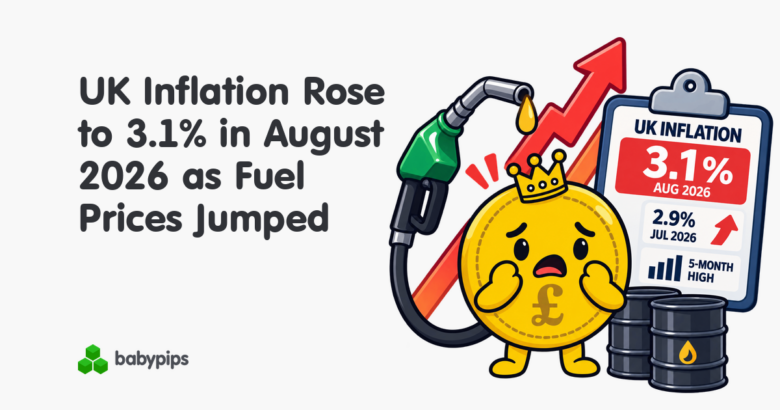
UK inflation climbed to 3.1% in the 12 months to August 2026, matching forecasts and hitting a five-month high. The rate rose from 2.9% in July, marking a second straight monthly increase. Pricier fuel at the pump did most of the damage. There is a silver lining though: core inflation held steady, which gives the Bank of England a little breathing room.
UK Inflation August 2026: Key Takeaways
- Headline CPI: rose 3.1% year-over-year in August 2026, up from 2.9% in July and in line with the 3.1% forecast
- Monthly CPI: up 0.5% in August, the fastest monthly pace in four months
- Core CPI: held at 2.6%, unchanged from July, even though markets braced for a small rise
- Motor fuels: prices jumped 23.0% over the year, the single biggest driver of the increase
- Petrol: hit 161.3 pence per litre, the highest level since November 2022
- Services inflation: stayed flat at 3.4%, a figure the Bank of England watches closely
- Next move: the Bank of England announces its rate decision tomorrow, September 17
What Were the UK Inflation Results for August 2026?
UK consumer prices rose 3.1% in the year to August 2026, up from 2.9% in July, according to the Office for National Statistics. That lands right on what economists forecast. It also marks the highest reading in five months and a second straight monthly climb.
On a monthly basis, prices rose 0.5% in August, the fastest pace in four months. The broader CPIH measure, which folds in housing costs, rose 3.3% over the year. For context, UK inflation now sits above the flash readings for Germany at 2.9% and France at 2.7%.
What Is Driving UK Inflation Higher?
Transport costs led the charge. Prices in that category rose 4.6% over the year, up from 3.6% in July. Motor fuels did most of the work.
Fuel prices jumped a striking 23.0% year-over-year, versus 15.5% the month before. Petrol climbed to 161.3 pence per litre in August, the priciest since November 2022. Drivers paid roughly 9 pence more per litre than they did in July.
Higher oil prices sit behind the surge. The ongoing conflict in the Middle East has kept global energy markets tense since early 2026. That feeds straight into what UK drivers pay at the pump.
Fuel was not the only culprit. Housing and household services inflation rose to 4.9%, and household energy prices climbed 6.0% over the year. Food inflation stayed calm at 1.3%, its lowest level since 2021.
Does the Core Inflation Number Offer Any Relief?
Core inflation tells a calmer story. Core CPI held at 2.6%, unchanged from July, even though markets expected a small rise. This measure strips out volatile items like energy, food, alcohol, and tobacco. It gives a cleaner read on underlying price pressure.
Services inflation also stayed flat at 3.4%. The Bank of England watches this number closely because it reflects domestic wage and price trends. Steady services inflation suggests the pickup came from fuel, not a broader spiral.
Goods inflation was the weak spot. Prices for goods rose 2.7%, up from 2.2% and the highest since September 2025. Energy did most of that lifting too.
What Does the UK Inflation Report Mean for the Bank of England?
The timing could not be sharper. The Bank of England announces its next rate decision on Thursday, September 17, just one day after this report. Its benchmark rate sits at 3.75%, held there since December 2025.
Most economists still expect a hold. Markets tell a more nervous story. Traders see roughly a 20% chance of a hike on Thursday, plus a 75% chance of two hikes by year-end, according to Reuters.
The Bank now faces a familiar bind. Rate hikes could choke off growth, but stubborn inflation makes cuts hard to justify. Its own forecast sees inflation peaking near 3.2% late this year, with risks pointing higher.
Promoted: The Rate Decision Lands Tomorrow. Want to See What Traders Think Happens Next?
Today’s inflation print arrived one day before the Bank of England’s rate call, and the market is split on whether the hawks win out. FX traders already know currencies move on what the crowd has priced in, not just on the headline itself.
Polymarket is a prediction market where traders buy and sell Yes/No contracts on real-world outcomes like central bank decisions and geopolitics. Prices read like crowd-implied probabilities and shift as headlines land, a useful companion lens when you study how event risk shows up in the pound and in gilt yields.
Important: Polymarket is not available in all countries and regions due to regulation and local rules. Eligibility depends on where you are, so always confirm before signing up. Event / prediction-market trading involves a high risk of loss of capital; you can lose your stake. This is not financial advice.
Disclosure: We may earn a commission from our partners if you sign up through our links, at no extra cost to you.
What Does the UK Inflation Report Mean for GBP Traders?
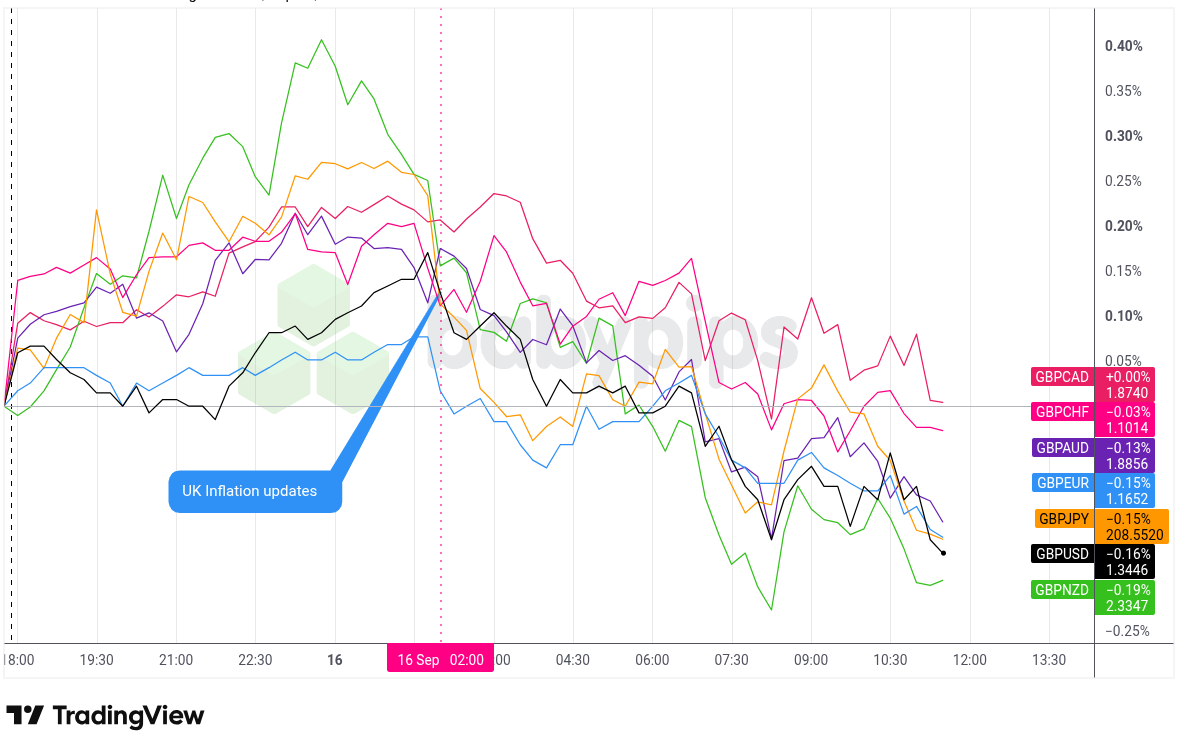
Overlay of GBP vs. Major Currencies – Chart Faster with TradingView
Sterling gave up its gains. GBP/USD slipped toward 1.3480 after the release, and the pound eased against every major peer through the session. An in-line print rarely sparks a lasting rally, since traders had already priced it in.
The bigger story is central bank divergence. Markets expect the US Federal Reserve to hike today while the Bank of England likely holds tomorrow. That gap in policy direction has kept a lid on pound rallies all week.
Thursday’s decision now carries real weight. Traders will focus less on the rate itself and more on the vote split. More hawks calling for a hike could give sterling a short-term lift.
You’ve got the macro outlook down, but a great thesis needs a precise entry. Bring your inflation and Bank of England read to life on TradingView’s Supercharts. Use professional-grade drawing tools and 100,000+ community indicators to map the exact GBP/USD levels where the smart money is moving. Do not just follow the trend, visualize it.
Frequently Asked Questions About UK Inflation
What is UK CPI and why does it matter for forex traders?
The Consumer Prices Index (CPI) tracks how much prices change for a typical basket of goods and services. The Office for National Statistics releases it every month. Traders watch it because it shapes Bank of England rate decisions, and rate expectations drive the pound.
What caused UK inflation to rise in August 2026?
Fuel prices did most of the damage. Motor fuel costs jumped 23.0% over the year as higher oil prices fed through to the pump. Housing and energy costs added to the pressure, while food inflation stayed low.
Will the Bank of England raise interest rates?
Probably not this week. Most economists expect the Bank to hold its rate at 3.75% on Thursday, September 17. Still, three policymakers voted for a hike in July, and rising inflation could pull more of them in that direction.
What does rising UK inflation mean for the British pound?
The effect is mixed. Hotter inflation can support the pound if it pushes the Bank toward higher rates. But if inflation climbs while growth stalls, traders may worry about stagflation, which would cloud the outlook for sterling.
Rising fuel costs just pushed UK inflation to a five-month high, and the Bank of England has to respond. But how does an inflation print actually move a currency? Premium members can read our lesson:
📖 Inflation: The Force That Moves Central Banks
This lesson breaks down how CPI, PCE, and PPI measure inflation, why central banks target 2%, and how inflation regimes from goldilocks to stagflation shape currency values and trading decisions.
And if you are not a Premium member yet, now is a great time to join. With BabyPips Premium, you get full access to School of Pipsology lessons that show you not just what the data says, but how to trade it before the crowd catches on.