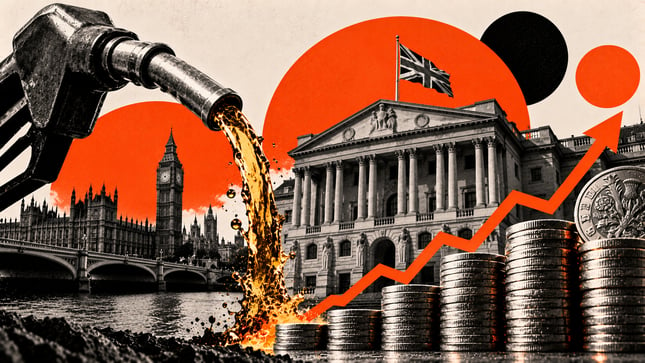
United Kingdom (UK) inflation as measured by the Consumer Price Index (CPI) accelerated to 3.5% YoY in September, up from 3.1% in August, according to the Office for National Statistics (ONS). This is the highest level since October 2025, exceeding economists’ expectations of 3.4% and pushing inflation further from the Bank of England’s (BoE) 2% target. The Consumer Price Index including owner occupiers’ housing costs (CPIH) hit 3.6%, up from 3.3%.
The acceleration significantly strengthens expectations of monetary tightening as early as November. However, the latest inflation increase masks a more complex problem. Much of the acceleration stems from energy prices, driven by the Middle East conflict and disruptions to global Oil supplies. Yet the Bank of England cannot directly influence these external factors.
Its real challenge is determining whether imported inflation could turn into a sustained increase in domestic prices, potentially justifying tighter monetary policy despite the difficulties facing the UK economy.
UK inflation: A 29.8% fuel price surge drives the latest increase
Soaring fuel prices are the main driver of the acceleration in UK inflation. According to the ONS, Motor fuel prices rose by 29.8% YoY in September, compared with an increase of around 23% in August. The average Petrol price reached 169.5 pence per litre, its highest level since August 2022, while Diesel climbed to 192.5 pence per litre, its highest level since July 2022. Transport inflation consequently rose by 6.6% YoY in September, compared with 4.6% in the previous month.
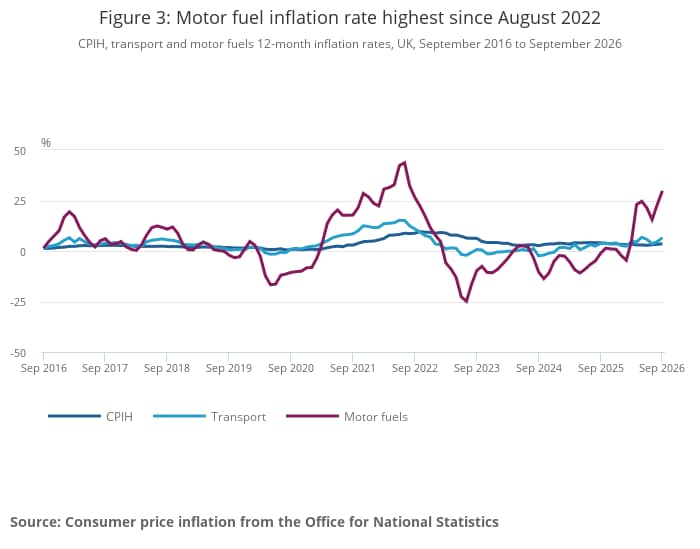
The surge reflects the consequences of the conflict involving the United States (US), Israel and Iran, which is disrupting energy flows through the Strait of Hormuz, one of the world’s most important Oil shipping routes.
However, this increase does not necessarily mean that prices across the entire economy are rising at the same pace. Food and non-alcoholic beverages inflation remained relatively contained at 1.3% YoY, while food and beverage prices declined by 0.2% between August and September.
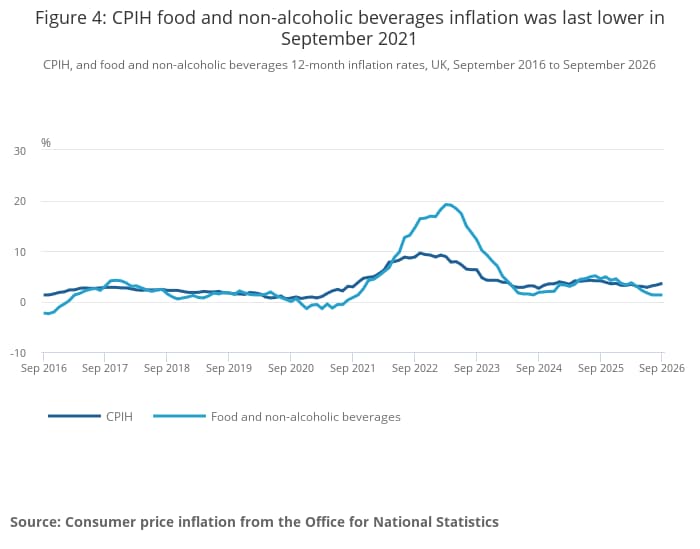
This divergence shows that the energy shock remains the main driver of the recent acceleration in inflation, even as other categories begin to experience growing price pressures.
Why the Bank of England cannot simply ignore the energy shock
According to LSEG data cited by CNBC, markets are pricing in a 98% chance that the BoE will raise interest rates by 25 basis points next month, lifting the benchmark interest rate from 3.75% to 4%.
The distinction between imported and domestic inflation is essential to understanding the Bank of England’s dilemma. Higher interest rates can curb consumption, investment and demand for credit, but they cannot increase global Oil production or restore energy supplies disrupted by geopolitical conflict. BoE Governor Andrew Bailey acknowledged this limitation in a speech earlier this month, according to Morningstar: “Interest rates cannot produce more oil or gas.”
However, the situation becomes more concerning when businesses persistently pass higher energy costs on to consumers and workers demand higher wages to compensate for lost purchasing power. These mechanisms, known as second-round effects, can turn a temporary supply shock into persistent inflation.
The latest UK data show several signs of price pressures extending beyond energy. Services inflation accelerated to 3.7% in September from 3.4% in August. Core inflation, which excludes volatile components such as energy and food, also rose to 2.8%, up from 2.6% in the previous month.
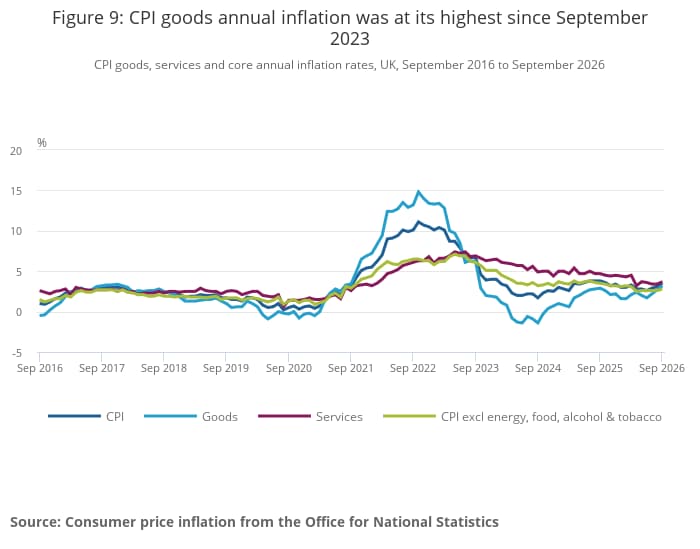
These figures suggest that inflationary pressures are no longer entirely confined to fuel prices, although their magnitude remains smaller than that of the energy shock.
Producer prices, as measured by the Producer Price Index (PPI), add to these concerns. Manufacturing input costs jumped 8.3% YoY, compared with 6.7% in August, while factory-gate prices rose 4.6%, their strongest increase since April 2023.
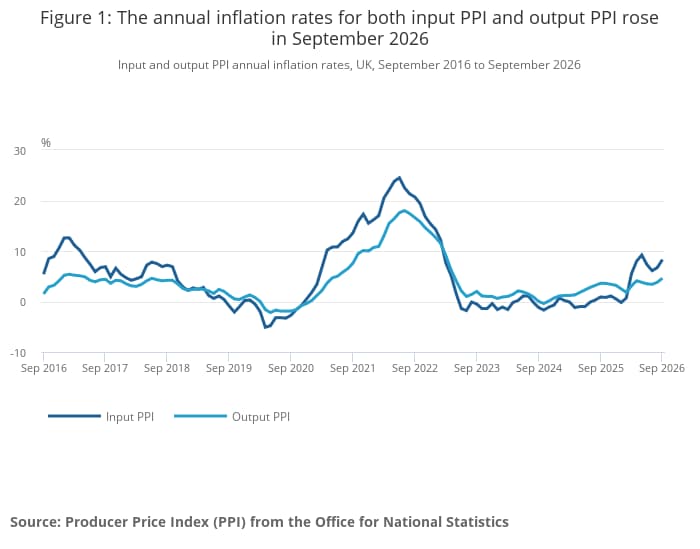
These increases could gradually feed through to consumers if businesses seek to protect their profit margins. Adam Deasy, Economist at PwC UK, highlights this risk in comments reported by Reuters: “Inflation moving closer to 4% makes it harder to simply look through the shock.”
The Bank of England’s challenge is therefore no longer simply to assess the scale of the energy shock, but also to determine how long it could last and whether it might change wage-setting and pricing behaviour.
A November rate hike looks almost certain, but what comes next?
September’s inflation figures reinforce expectations of the first UK interest rate increase since 2023. The Bank of England has kept its benchmark interest rate at 3.75% since its last cut in December 2025. However, divisions within the Monetary Policy Committee (MPC) show that several policymakers are already in favour of tightening monetary policy.
At the September meeting, three members voted to raise interest rates, while six supported keeping them unchanged. Since then, accelerating inflation, resilient economic growth and the latest employment figures have strengthened the more hawkish policymakers’ arguments.
David Rees, Head of Global Economics at Schroders, believes the UK faces a particularly unfavourable combination of imported and domestic inflationary pressures. “Britain is facing a perfect storm of imported inflation pressures”, he said, according to Bloomberg. Rees considers a November rate hike virtually certain.
Aberdeen Investments Economist Felix Feather believes the expected increase in household energy bills could require further monetary tightening, according to Morningstar: “We expect the headline rate to peak over 4% in Q1 2027 after the cap on household energy bills is lifted by around 25%. That should prompt a further BoE hike in February next year.”
However, not all economists believe a prolonged series of rate hikes will be necessary. ING Economist James Smith says second-round effects “are so far non-existent.” For Smith, a November rate hike would primarily reflect precautionary risk management rather than a response to an inflationary spiral that has already taken hold.
This distinction matters. If domestic price pressures stabilise over the coming months, the Bank of England could limit its tightening cycle. Conversely, persistently accelerating wages and services inflation could force policymakers to maintain restrictive monetary policy for longer.
The Autumn Budget adds another layer of uncertainty
Monetary policy is not the only source of uncertainty for the UK economy. Chancellor of the Exchequer John Healey is due to present his first Autumn Budget on October 28, against a backdrop of accelerating inflation and deteriorating public finances. According to ONS data, public sector borrowing reached £24.5 billion in September, while public debt surpassed £3 trillion for the first time.
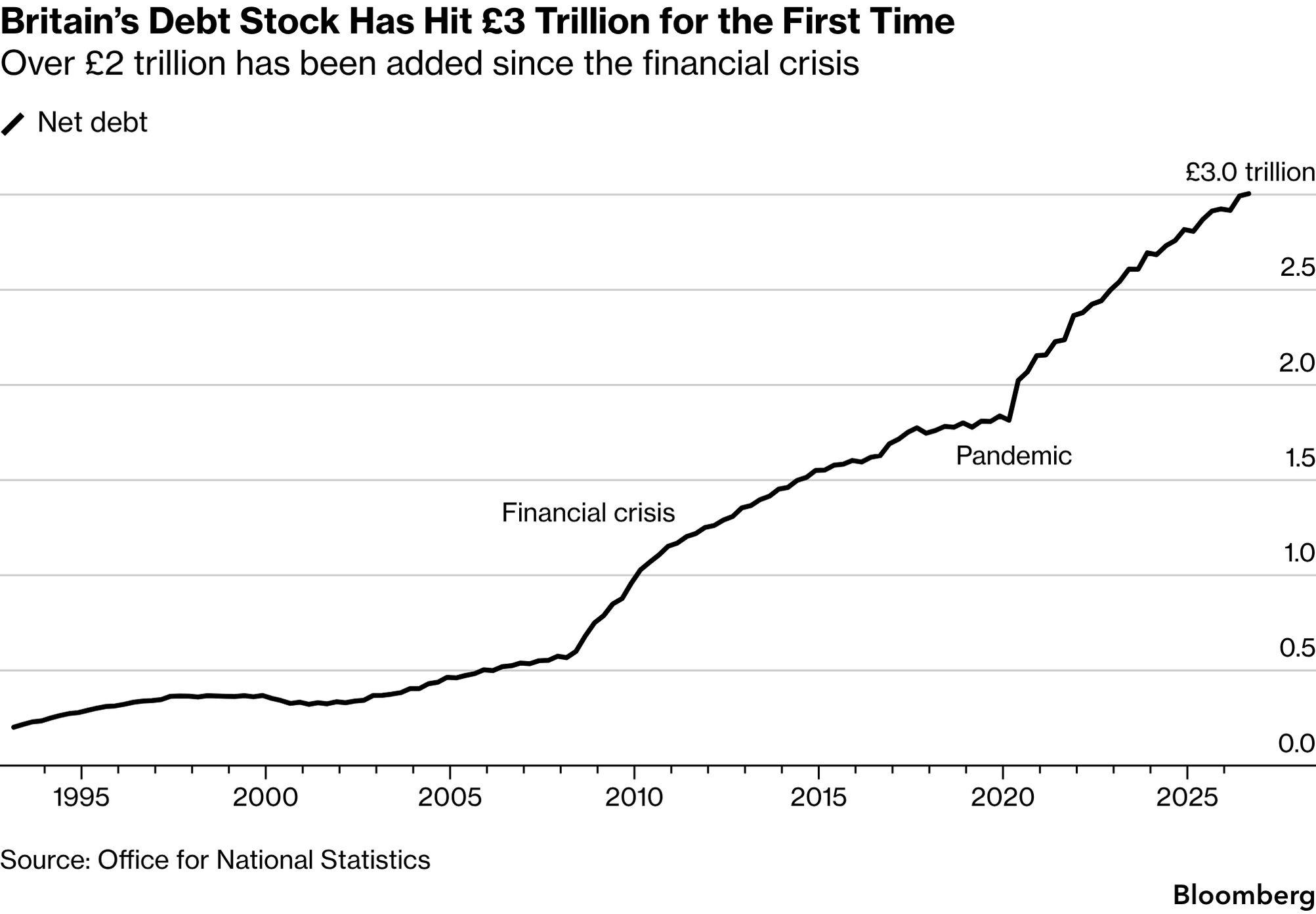
This situation limits the government’s fiscal room for manoeuvre, even as rising energy costs increase pressure to provide support for households. The government must therefore strike a balance between protecting purchasing power and maintaining its commitment to fiscal discipline.
Excessive support measures could stimulate demand and complicate efforts to bring inflation under control. Conversely, overly restrictive fiscal policy could further weaken economic growth.
For the Bank of England, the budget announcements will therefore be another important factor to consider ahead of its November 5 policy decision.
What does higher UK inflation mean for the British Pound?
For the British Pound (GBP), accelerating UK inflation carries conflicting implications. In theory, rising interest rate expectations support a currency by improving the potential returns on assets denominated in that currency. Higher UK interest rates could therefore benefit the British Pound against currencies whose central banks are pursuing less restrictive monetary policies.
However, this advantage largely depends on what is already priced into financial markets. With markets assigning a 98% chance to a November rate hike, a 25-basis-point increase would not represent a major surprise for investors. Indeed, the GBP remains relatively stable against the US Dollar (USD) and the Euro (EUR) following Wednesday’s inflation release.
The muted market reaction suggests that investors are now paying more attention to the future path of interest rates than to the November decision itself. Hawkish BoE communication signalling several additional rate hikes could support the British Pound, particularly against the US Dollar if monetary policy expectations diverge. Conversely, a rate increase accompanied by growing concerns about consumption, investment and economic growth could trigger a less favourable reaction.
Three signals that could determine the next move for the Pound
The coming weeks will be crucial in determining whether the acceleration in UK inflation primarily reflects a temporary shock or the beginning of a new period of persistent inflationary pressures.
The first indicator to watch will be energy prices. Stabilising Oil prices could gradually ease pressure on fuel costs, while further disruptions in the Middle East could prolong the increase in energy expenses.
The second factor will be the evolution of services inflation and wage growth. A further acceleration would strengthen the case for multiple interest rate hikes, while stabilisation would allow the BoE to adopt a more cautious approach.
Finally, the October 28 budget decisions and the economic projections accompanying the November 5 monetary policy meeting will provide greater clarity on the balance between inflation and growth.
For the British Pound, the key question is therefore no longer whether the Bank of England will raise interest rates in November, but how far it will need to go to prevent the energy shock from becoming entrenched in the UK economy.
High inflation can support a currency when it leads to expectations of higher interest rates. But when it primarily reflects deteriorating purchasing power and rising imported costs, its implications become considerably less favourable.