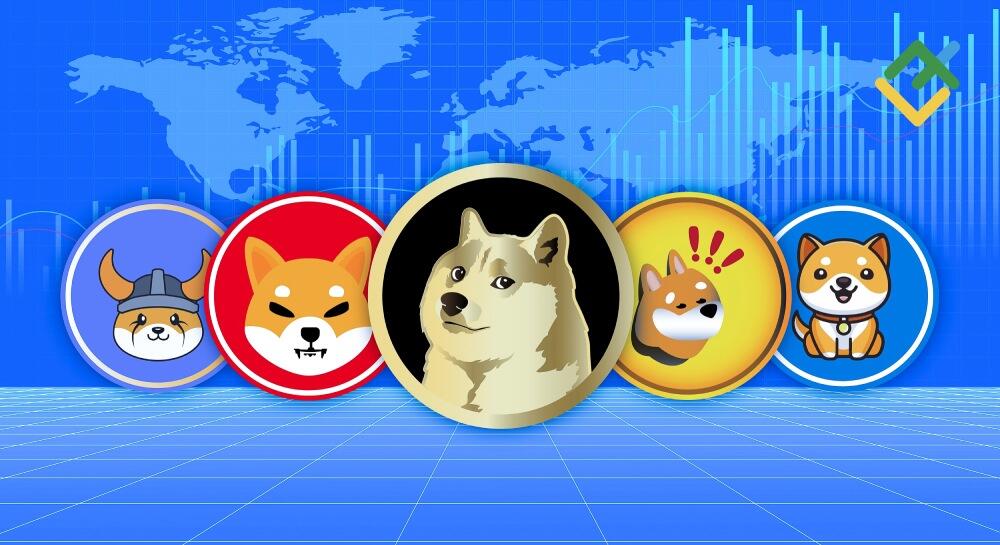
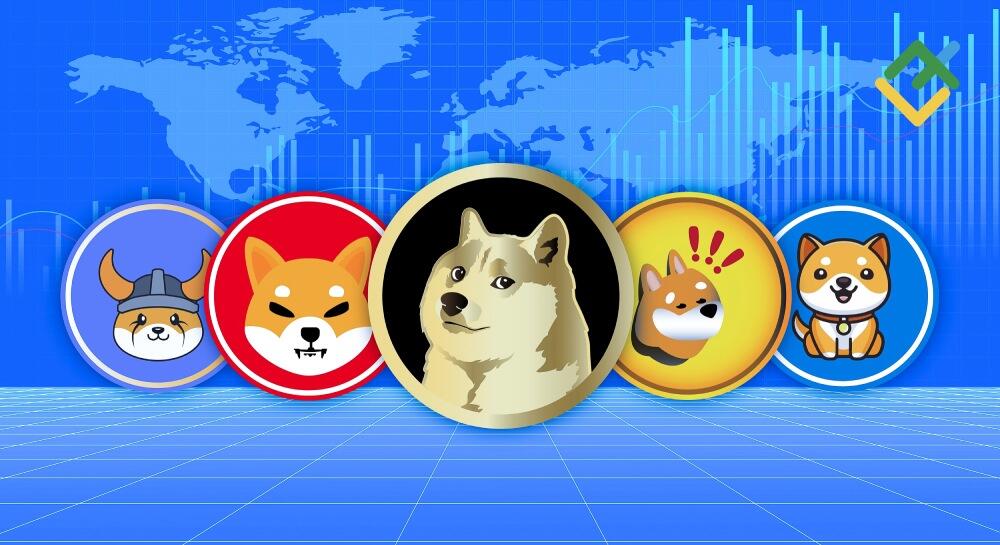

Meme coins are digital assets built around internet memes. Their value does not depend on technology or business profits. What matters is how popular the meme becomes and how quickly it spreads. So what are meme coins today? Once seen as a novelty, they now form a distinct segment of the crypto market with a combined market cap in the tens of billions of dollars.
Meme cryptocurrencies are no longer a joke. People discuss them on social media, buy them on centralized and decentralized exchanges, and add them to their investment portfolios. Some traders profit from sharp price spikes, while others lose their entire stake within hours. The outcome depends on market conditions, strategy, and risk management, since high volatility can bring both big gains and heavy losses. Ultimately, meme coin investors count on crowd psychology, not on the project’s revenue or profit.
The article covers the following subjects:
Major Takeaways
- Meme coins are cryptocurrencies whose price depends on the popularity of a meme rather than on fundamental factors. Their practical use comes second.
- Dogecoin was the first meme coin. It was launched on December 6, 2013, as a parody of Bitcoin.
- In February 2025, SEC staff described what a typical meme coin is and stated that such coins are not securities. However, the experts noted that products that only use the meme coin label to bypass the law are a different matter.
- Only 4.55% of new tokens survive. Out of 18.67 million launches, just 850,180 are still active.
- The memecoin market has plummeted by 82% from its 2024 peak, falling from $150.6 billion to $24.5–$34.7 billion.
- In 2025, investors lost more than $2.8 billion to rug pulls, with an average loss of $510,000 per case.
- The largest meme coins by market cap: Dogecoin ($13.7 billion), MemeCore ($3.93 billion), Shiba Inu ($2.77 billion), Pepe ($1.15 billion), and Pudgy Penguins ($424 million).
What Is a Meme Coin?
Meme coins are cryptocurrencies inspired by internet memes, jokes, and pop culture. Imagine a funny image going viral on social media. Someone creates a token based on it, the community jumps on board, and soon the meme coin is seeing millions of dollars in trading volume.
Meme coin themes are as diverse as internet culture itself. The most recognizable are animal tokens such as Dogecoin, Shiba Inu, and cat-themed coins like POPCAT. Political meme coins, known as PolitiFi, form a separate niche. They satirize current events and are not affiliated with any official institutions. There are also tokens inspired by celebrities or viral pop-culture moments, and some of them appear after just a single tweet.
The key difference between meme coins and “serious” projects is the lack of fundamental value. Ethereum, for example, supports an entire ecosystem of applications. A meme coin, by contrast, has nothing but social media hype, a viral meme, and the belief that someone will pay more for it tomorrow. Meme coins neither generate revenue nor pay dividends.
This simplicity has a strong psychological effect. Research shows that the fear of missing out (FOMO) and herd behavior are the main reasons people invest in meme coins. They buy not because they believe in the technology, but because they are afraid of being left behind while others make money. This does not mean meme coins are useless. They are used for speculation, help people feel part of online communities, and give beginners an easy way into crypto. But the same simplicity that makes meme coins appealing also makes them risky for investors.
If you are new to the market, begin by learning what cryptocurrency is. This will make it easier to navigate crypto markets.
How Do Meme Coins Work?
Meme coins work through four key elements: smart contracts, liquidity, community, and social media.
Smart contracts form the technical base. Developers deploy a token contract on blockchains such as Solana, Ethereum, or Base. The contract determines the token supply, how trading works, and how tokens are distributed. Some launchpads use a bonding curve to set the price of a new token. It is an algorithm that changes the price as supply and demand shift. The exact rules for buying, selling, issuing tokens, and providing liquidity vary from platform to platform. In theory, the code should go through an audit, but thousands of tokens are launched without verification, which leads to rug pulls and other types of fraud.
Liquidity is what makes a token tradable. Without it, you will not be able to buy meme coins or withdraw your earnings in fiat currency. Locking LP tokens lowers the risk of developers removing liquidity, but this alone does not make a token safe.
The community is the driving force behind the hype. Meme coins rise and fall with activity on Telegram, Discord, and X. The community supports the token by posting memes, sharing content, and running joint campaigns. When it loses interest, the token fades away.
Social media fuels the whole process. Online hype and social media trends can push a token’s market cap from $10,000 to $10 million within hours. It can work just as fast in the opposite direction, since one tweet is enough to send the price tumbling. Sniper bots are active here too. They monitor the mempool and buy tokens in the very first block after liquidity is added, before ordinary buyers have a chance. In November 2025, for example, two such bots made $1.3 million during the launch of the JESSE token by buying 26% of the supply in the same block where the contract was created. As a result, by the time retail investors noticed the token, the bots had already captured part of the price rise.
Trading volume and how much of the supply large holders own tell you far more about a token. For example, if five wallets hold 80% of the supply, they could crash the price with a single trade.
How Meme Coins Started: From Dogecoin to Today
Meme coins first appeared on December 6, 2013. That day, Billy Markus and Jackson Palmer launched Dogecoin as a joke to parody Bitcoin. Its image came from an internet meme featuring a Shiba Inu dog named Kabosu.
No one expected the joke to take off. But it struck a chord with internet users, and Dogecoin became a popular tipping currency on Reddit. Its community soon grew into one of the most active in crypto.
The next wave of meme coins swept the market in 2021. Shiba Inu marketed itself as the Dogecoin killer. Celebrity mentions added to the hype, and at its peak, the token’s market capitalization exceeded $40 billion.
In December 2024, Pudgy Penguins, a popular NFT project, introduced its ecosystem token PENGU. The low barrier to entry attracted new participants and led to millions of new tokens, but only a handful of them have survived.
Today, popular meme coins are not just dog-themed tokens. Pepe, Bonk, and Official Trump have also gained a following, and each has its own narrative and audience.
The Altcoin Season Index helps assess altcoin performance relative to Bitcoin.
The Biggest Meme Coins Right Now
Dogecoin (DOGE) is the largest meme coin, with a market capitalization of around $13.7 billion. It is one of the few meme coins to rank among the 15 biggest cryptocurrencies.
Shiba Inu (SHIB) is the second most recognizable meme coin, with a market capitalization of $2.77 billion. Its ecosystem includes a decentralized exchange (DEX) and a metaverse.
Pepe (PEPE) is a cryptocurrency based on an internet meme featuring a frog. Its market capitalization is $1.15 billion. In some weeks of 2026, its price rose by 52–64%.
Pudgy Penguins (PENGU) is a good example of an internet joke that grew into a brand. Its market capitalization is $424 million.
MemeCore (M) was the surprise of 2026. The token surged by more than 8,000%, and its market capitalization reached $3.93 billion.
Bonk (BONK) was the first major meme coin on Solana. Its market capitalization is $386 million.
Official Trump (TRUMP) is a political meme coin that was actively promoted by high-profile figures. However, about two-thirds of buyers ended up losing money.
Bitcoin dominance is another indicator of market structure. However, it cannot predict the price of a specific meme coin on its own.
How to Buy Meme Coins
The easiest way to buy meme coins today is through centralized exchanges (CEXs). Major meme coins like DOGE, SHIB, and PEPE are available on Binance, Bybit, Coinbase, and OKX. However, CEXs usually list only established tokens, so early-stage meme coins are not available there. Many meme coins never get listed at all. When choosing a meme coin, check its trading volume and how long ago it was launched.
The second option is DEXs such as Uniswap, Raydium, and PancakeSwap, where new meme coins are listed first. You will need a wallet such as MetaMask or Phantom, some of the network’s native token for gas fees, and the token’s contract address. Before confirming a transaction, review the exchange terms.
You can also sign up for LiteFinance, which offers a wide range of crypto assets, including meme coins. By opening long or short positions, you can trade in either direction, whether prices go up or down.
Slippage is a key thing to watch. On low-liquidity DEXs, the difference between the expected and actual prices can reach 20–50%. So, if you buy a meme coin with a market cap of $50,000, slippage can eat up half your investment.
To withdraw real money, first sell your tokens on a DEX for SOL or ETH. Then transfer them to a CEX and sell them for fiat. Each step comes with its own fees and risks.
If you use leverage in crypto trading, keep in mind that it amplifies both potential profits and risks.
Memecoin Trading Risks
Meme coin trading is one of the riskiest areas of the cryptocurrency market. Here are its key risks:
- Rug pull. Token developers drain the liquidity pool and disappear with the funds. In 2025, rug pulls stole more than $2.8 billion.
- Fake tokens. Scammers create copies of popular meme coins. A beginner buys PEPE2 by mistake and loses money.
- Whale manipulation. When a few large holders control a big share of the supply, it becomes easy to run a cryptocurrency pump-and-dump scheme. They build hype on social media, sell at the peak, and crash the price.
- No liquidity lock. If LP tokens are not locked, the developer can withdraw liquidity at any time.
- High volatility. Extreme price swings are common in this segment. A token that rises 500% in an hour can drop 80% in ten minutes.
- Honeypot scams. The contract is coded so that the token can be bought but not sold. As of 2026, honeypots account for 25% of all rug pulls, with an average loss of $500,000. More than 60% of meme coins launched in 2025 were flagged as potential scams within their first 30 days.
- Hidden mint function. In 35% of rug pulls, the contract allows unlimited token minting. Once the price spikes, the deployer mints millions of new tokens and dumps them into the pool, sending the price close to zero.
- MEV sandwich attacks. Bots scan the mempool and place trades right before and after yours, profiting from the price difference through slippage. Sandwich attacks make up about 51% of all MEV activity on Ethereum and have extracted more than $1.2 billion from users. In March 2025, Raydium alone recorded 10,633 attacks in a single day, with losses totaling 916 SOL.
Are Meme Coins a Good Investment?
Before making an investment decision, take the time to understand what meme coins are. Meme coins do not generate cash flow and have no intrinsic value, so their price depends on the shared belief that another buyer will pay more. In speculative investing, there is no room for emotions.
“Good investment” is not really the right way to describe meme coins. They are trading instruments, not long-term portfolio holdings. If you are considering them, decide in advance how much risk you can take and be prepared to lose your entire investment.
Meme coins carry obvious risks such as rug pulls, scams, low liquidity, high volatility, and market manipulation. The future of meme coins depends on whether they can attract lasting online communities instead of short-term speculators. For now, the trend points the other way, as the market is shrinking, survival rates keep falling, and hype fades quickly.
If you want to learn how to invest in meme coins wisely, start with on-chain analysis. Tools like Nansen, Dune, and Arkham show where smart money is flowing. Tracking wallets and checking smart contracts can help you find meme coins early and identify those with strong growth potential. Tokens with small market caps can multiply your capital, but the risk is also very high. Social media helps tokens spread faster but does not guarantee growth, so keep an eye on viral trends.
Before trading with borrowed funds, make sure you know how liquidation in the crypto market works, since your position may be closed automatically.
Conclusion
Meme coins started as internet fun and have evolved into a distinct part of the crypto market with a combined value in the tens of billions of dollars. They offer the chance to profit from sharp price moves, but at the cost of a high risk of losing capital. Nevertheless, meme coins are now firmly established in the market, and ignoring them means missing out on profit opportunities.
Early meme coins like Dogecoin proved that internet culture can create digital assets with real market value. Newer tokens show the other side of the story, as 95% of them disappear within 90 days. Anyone who trades meme coins needs, at the very least, to understand on-chain metrics, check smart contracts, manage risk properly, and do their own research.
The content of this article reflects the author’s opinion and does not necessarily reflect the official position of LiteFinance broker. The material published on this page is provided for informational purposes only and should not be considered as the provision of investment advice for the purposes of Directive 2014/65/EU.
According to copyright law, this article is considered intellectual property, which includes a prohibition on copying and distributing it without consent.