
Many people think commodity trading is mainly about analyzing seasonal trends. In reality, the most popular commodities are highly liquid, making them suitable for intraday trading and even scalping. Thanks to the liquidity of commodity futures, traders can profit from short-term price movements with almost any amount of capital.
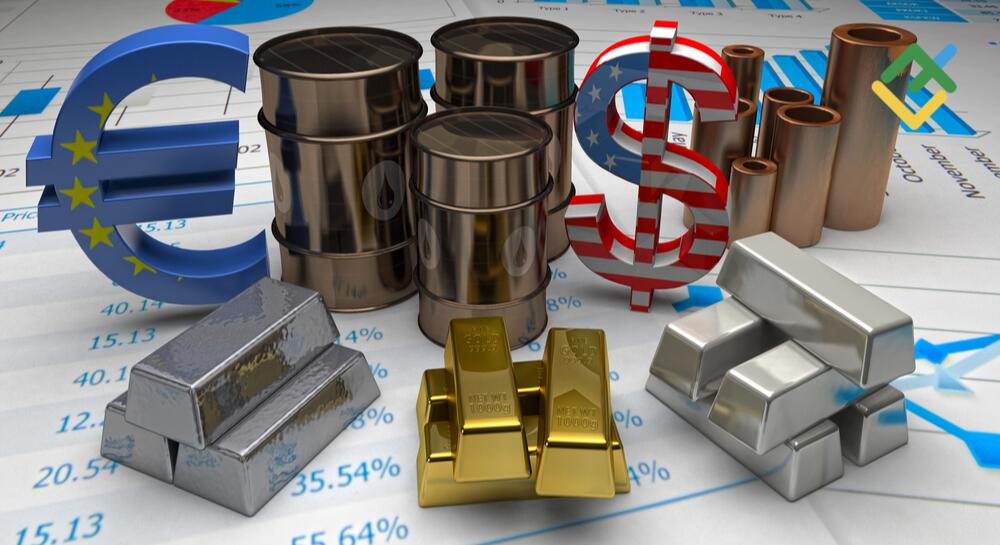
The commodity market includes fuel, industrial raw materials, agricultural products, and precious metals. Their high volatility creates trading opportunities across all time frames, with some price moves exceeding 1,000%. This article explains how to take advantage of these opportunities through commodity trading.
The article covers the following subjects:
Major Takeaways
|
Main Thesis |
Insights and Key Points |
|
What is commodity trading? |
Commodities are an asset class traded on the commodity market. They include raw materials and primary products that are bought and sold and form the basis of consumption. |
|
What types of commodities are there? |
Commodity exchanges trade agricultural, mineral, energy, and chemical commodities, as well as secondary raw materials. |
|
Why is the commodities market popular? |
Commodities are essential goods that play a key role in the global economy. Commodity trading is also a valuable tool for businesses and investors, as these assets are highly liquid and can be traded through mutual funds or independently. |
|
How to start trading commodities? |
Commodity trading on an exchange involves buying and selling specialized contracts. You can start trading commodities through a broker with access to the commodity market. However, this type of trading requires both knowledge and an understanding of how these assets are priced. |
|
What drives commodity prices? |
Commodity prices are driven by supply and demand. However, economic and production factors, geopolitics, seasonal trends, and market sentiment also play a significant role. |
|
Risks associated with commodity trading |
The main risks include potential capital losses, supply chain disruptions, and limited market liquidity. |
What Is Commodity Trading?
A commodity is a standardized raw material or primary product that can be bought and sold.
Commodity trading involves speculating on commodity price movements using financial instruments traded on commodity exchanges. It also includes buying commodities for future delivery.
Today’s commodities market differs significantly from the commodity trading practices of the 20th century. Today, traders primarily use it for price speculation, risk hedging, portfolio diversification, and inflation protection.
Types of Commodities
The modern commodities market offers several major categories of commodity assets, with daily trading volumes amounting to tens of billions of dollars.
1. Agricultural Commodities
Agricultural сommodities include products obtained through farming, crop production, and fishing. The main agricultural products include grains, vegetables, fruits, meat, milk, cattle, fish and seafood, cotton, flax, wool, leather, coffee, tea, and cocoa.
2. Minerals
Major mineral commodities include iron ore, copper ore, aluminum ore, oil, coal, natural gas, salt, sulfur, phosphate rock, potash, sand, and clay. Moreover, this category includes rhodium, the world’s most expensive metal, which costs over $10,000 per ounce.
3. Energy Commodities
Energy commodities are used as primary energy sources. These include oil, natural gas, coal, peat, and oil shale.
4. Metals
This category comprises metals obtained from the processing of ferrous, non-ferrous, and precious ores. The main industrial metals include steel, cast iron, copper, nickel, aluminum, gold, silver, and platinum.
5. Timber
This category covers unprocessed wood and primary wood products, such as lumber, plywood, and pulp.
6. Chemical Products
Chemical industry products include basic chemicals rather than finished products. The main chemical products include sulfuric acid, hydrochloric acid, alkalis, alcohols, solvents, industrial rubber, plastics, and fertilizers.
7. Recycled Materials
This category includes materials recovered from processing waste for recycling, such as ferrous and non-ferrous metal scrap and waste paper.
How to Trade Commodities
Commodity trading is similar to trading other financial instruments, although it has several important differences.
Since speculative futures trading was introduced in emerging markets, contracts settled without the physical delivery of goods have become the dominant form of trading. Investors now have access to several types of standardized contracts.
1. Commodity Futures
Futures are the most widely traded contracts in the commodities market. They allow traders to buy or sell a commodity at a predetermined price on a specified future date. Besides, they are suitable for speculative trading and can be used in any trading strategy. Gold, silver, and copper are among the most actively traded commodity futures.
2. Commodity Options
Options are primarily used to hedge commodity price risk, although many traders also use them for speculation. They give the holder the right, but not the obligation, to buy or sell a commodity at a predetermined price before or on a specified date.
3. Commodity CFDs
Contracts for Difference (CFDs) are one of the most popular ways to trade commodities. Unlike futures and options, CFDs do not involve taking ownership or delivery of the underlying asset. Instead, traders speculate on price movements through a contract with their broker.
4. Commodity ETFs
Commodity exchange-traded funds (ETFs) typically track a basket of commodities from different sectors. As a result, investors receive modest but stable returns with effective risk management.
5. Digital Tokens
Digital tokens are relatively new investment instruments that have gained popularity in recent years. Each token is backed by a physical commodity, with its value linked to the underlying asset. At present, such tokens are available for only a limited number of commodities, primarily gold and oil.
Commodity CFDs
Among the most popular ways to trade commodities, CFDs stand out for their simplicity. They allow traders to profit from price movements without owning the underlying asset. Instead, you trade the difference between the opening and closing prices of the contract. CFDs also make it possible to profit when commodity prices fall.
Essentially, a CFD is a contract between a broker and a client. The key advantage of trading CFDs is the ability to trade with leverage.
Advantages of CFD trading:
- You never take ownership of the underlying asset or arrange its physical delivery. There is no need to worry about storage, transportation, or inventory management.
- CFDs offer exceptional flexibility. You can open positions of virtually any size and hold them for as long as you choose.
- Unlike futures contracts, CFDs do not have an expiration date. In many ways, they resemble speculative futures, but they can be held indefinitely.
- CFDs are available on virtually every trading platform through most major brokers. This allows traders to access commodity markets from anywhere in the world without using a specific exchange.
How to Start Trading Commodities
Just a couple of decades ago, it was nearly impossible for retail investors to open an account on a commodity exchange. Today, however, commodity trading is accessible to virtually anyone. As long as you meet the minimum margin requirements, you do not need a license or professional trader status to get started. The process is straightforward and typically involves just a few steps:
1. Learn the basics of commodity trading.
Trading commodities online is similar to trading currencies and stocks, but there are a few important differences. Before you start trading oil or gold, it is essential to understand the basics of how these markets work and what drives prices. It is also useful to learn how commodity exchanges work and what requirements apply to individual investors.
2. Choose a broker.
A reliable broker gives you access to the commodities market and handles the execution of your trades. Every broker has its own trading conditions, level of reliability, and trading platform. Take the time to compare these factors and decide which broker best suits your needs. Another important factor is how quickly funds can be transferred between you and the broker. Market conditions on commodities and stock markets can change rapidly, so your broker should offer fast deposits and withdrawals.
3. Fund your trading account.
If you are satisfied with the broker, you can register and open an account. Once you have completed the required identity verification, you can fund your trading account. Deposit only the amount you need to trade comfortably. There is no reason to keep extra funds in your account if you are not planning to use them for trading.
4. Choose your instrument and trading method.
Once you are ready, you can start trading. First, choose the commodities you want to trade and decide how you want to trade them. Do not spread your investments across too many different commodities. Instead, focus on three or four assets that can offset each other. For example, gold and oil often move in opposite directions. When gold prices rise, oil prices usually fall, and vice versa. Once you have chosen your commodities, decide whether you want to trade futures, ETFs, options, or CFDs.
5. Develop a trading strategy.
If you decide to trade on your own, you will need a trading plan. Most traders fall into one of two broad categories: technical traders and fundamental traders. Technical traders rely on technical analysis and make trading decisions based on indicators, chart patterns, and candlestick formations. Fundamental traders focus on fundamental analysis, using economic news and data to guide their trades.
If you have little or no trading experience, start by trading the news. News is one of the main drivers of short-term price movements in the commodities market. Events around the world can have a significant impact on commodity prices, creating frequent trading opportunities. However, this approach also carries significant risk. Prices can move sharply after major news releases, so it is possible to lose money just as quickly as you can make it.
6. Start trading.
Now it is time to start trading. When you spot a trading opportunity, place a buy or sell order and monitor the market to see how your trade develops. If the market moves as expected, you will profit from the price difference. You can also allocate part of your funds to copy the trades of experienced commodity traders or use automated trading.
What Moves Commodity Prices
Commodity prices are influenced by several key factors, including supply and demand, geopolitics, macroeconomic conditions, technological developments, and seasonal tendencies. Which of these factors has the greatest impact depends on current market conditions.
1. Supply and Demand.
Commodities are essential goods, so their prices are largely driven by supply and demand. As demand for a commodity increases, its price generally rises. When demand falls, prices tend to decline.
Supply depends on factors that affect production, such as output levels, the discovery of new deposits, the depletion of existing ones, production disruptions, and transportation. Government policies and production quotas can also influence supply. A good example is OPEC, which helps regulate global oil production.
Demand is shaped by factors such as economic growth, technological progress, seasonality, and the availability of alternative products. Governments and regulatory bodies can also influence demand.
2. Geopolitical Factors.
Geopolitical events can significantly affect supply and demand. These include armed conflicts, economic sanctions, political instability in commodity-producing regions, natural disasters, pandemics, and other major disruptions.
3. Macroeconomic Factors.
Market prices for commodities are also affected by exchange rates. Most commodities are traded in US dollars. When the US dollar strengthens, commodities become more expensive for buyers using other currencies. As a result, commodity prices tend to fall.
Inflation and interest rates also play an important role. During periods of high inflation, investors often turn to safe-haven assets such as gold and the US dollar. As demand for these assets increases, their prices tend to rise.
4. Speculative Activity.
Speculators play an important role in commodity markets, even though they have no interest in the commodities themselves. Their goal is to profit from price movements. They often trigger panic selling or buying by placing large orders. As prices begin to rise or fall rapidly, other market participants rush to close their positions or follow the trend. As a result, trading volume and market volatility increase.
5. Technological Changes.
New technologies have a direct impact on supply and demand. If a mining company improves its extraction methods, production increases, leading to higher supply. The same applies to demand. When a company develops a new product that requires more raw materials, demand for those materials increases, driving prices higher.
Commodity Trading Examples: Historic Commodity Price Shocks
The commodities market is so vast and influential that most people are familiar with the major events and price swings that have shaped everyday life. You do not have to look far for examples. The past few years alone have seen several major disruptions around the world.
The Middle East Conflict.
In early March 2026, an armed conflict broke out in the Middle East, involving many countries. This had a major impact on the oil market, as the region is home to many of the world’s leading oil producers and exporters. In addition, the conflict led to the closure of the Strait of Hormuz, through which up to 20% of global oil shipments pass.
The global supply of oil fell sharply, while demand increased, creating a shortage. Oil prices soared from $70 to $110 per barrel in just one month. This allowed traders to make substantial profits. Without leverage, the return exceeded 62% over the month, while CFD traders were able to achieve returns of more than 1,000%.
Tariff Wars of 2025.
In early 2025, US President Donald Trump began pursuing a hardline trade policy and raised import tariffs in the spring. For some countries, tariffs reached 350%, while the average rate stood at 20%. This decision had a negative impact on economies around the world and weakened confidence in the US dollar as a safe-haven asset.
Demand for the US dollar declined sharply, and investors began looking for alternatives. They turned to precious metals. As a result, gold, silver, and platinum prices on the London Metal Exchange surged. Other exchanges soon followed, and by January 2026, gold had climbed to $5,500 per ounce and silver to $120, delivering a 200% return without leverage.
The COVID-19 Pandemic.
The COVID-19 pandemic affected the entire world, causing prices for many commodities to skyrocket. The food market was particularly affected. At the peak of the pandemic, key agricultural regions also experienced adverse weather conditions. In late 2020, droughts in Brazil and Argentina disrupted soybean planting, which in turn delayed corn planting. At the same time, major importing countries, concerned about disruptions to supply chains, increased their corn purchases to build up strategic reserves.
As a result, corn prices rose to $733 by May 2021. During the same period, soybean prices climbed to $1,660 and wheat prices to $780.
There are many such examples around the world. What is a disaster for some can be an opportunity for others to profit.
Commodity Seasonality and Catalyst Calendar
Experienced traders know that commodity markets are cyclical because of seasonal factors. Let us take a look at the seasonal calendar for agricultural commodities:
- Spring is the planting season. During this time, long-term investors assess the risks of adverse weather conditions and factor them into prices, while also evaluating future supply.
- Summer and early fall are the harvest season. As actual crop yield data becomes available, market supply often increases, putting downward pressure on prices.
Seasonal calendar for energy sources:
- Winter is a period of higher demand for heating and fuel. During this time, countries increase their purchases of oil and gas. Weather conditions can also have a significant impact. Colder winters increase fuel consumption, boosting demand and driving prices higher.
- Summer is the peak travel season and a time to build up fuel reserves. Demand for fuel, especially jet fuel, increases as air travel picks up. Countries also replenish their gas and fuel reserves ahead of winter.
Seasonal calendar for precious metals:
- Winter is the holiday season. During this time, demand for gold and silver jewelry increases, driving their prices higher.
- Summer is the vacation season and a period of weaker demand. Consumers spend more on travel during the summer, naturally reducing demand for jewelry. Trading volumes in the gold and silver markets also tend to decline.
Key pricing factors:
- Weather anomalies. Droughts, heavy rainfall, floods, and frosts can reduce crop yields and affect the supply of agricultural commodities.
- Geopolitical events. Armed conflicts, economic sanctions, and trade restrictions can disrupt supply chains and create commodity shortages.
- Regulatory decisions. Organizations such as OPEC can adjust oil production levels, directly affecting market supply and demand.
- Macroeconomic conditions. Global economic trends, inflation, interest rates, and exchange rates all influence commodity prices.
- Commodity inventories. Major organizations, such as the EIA for the oil market and the USDA for agricultural commodities, regularly publish inventory reports. Changes in inventory levels can influence market trends.
- Logistics. Factory strikes, transportation disruptions, and border congestion can disrupt supply chains, leading to shortages and higher prices.
Conclusion
Investing in commodities is popular among traders with medium to large amounts of capital. However, even beginners often choose to trade gold or oil because these markets are highly volatile. When trading commodities, it is crucial to understand the factors that influence their prices.
Commodity investing can be highly profitable, but it requires knowledge and experience. Keep in mind that commodities can also be used to hedge risk and build a more balanced investment portfolio.
The content of this article reflects the author’s opinion and does not necessarily reflect the official position of LiteFinance broker. The material published on this page is provided for informational purposes only and should not be considered as the provision of investment advice for the purposes of Directive 2014/65/EU.
According to copyright law, this article is considered intellectual property, which includes a prohibition on copying and distributing it without consent.