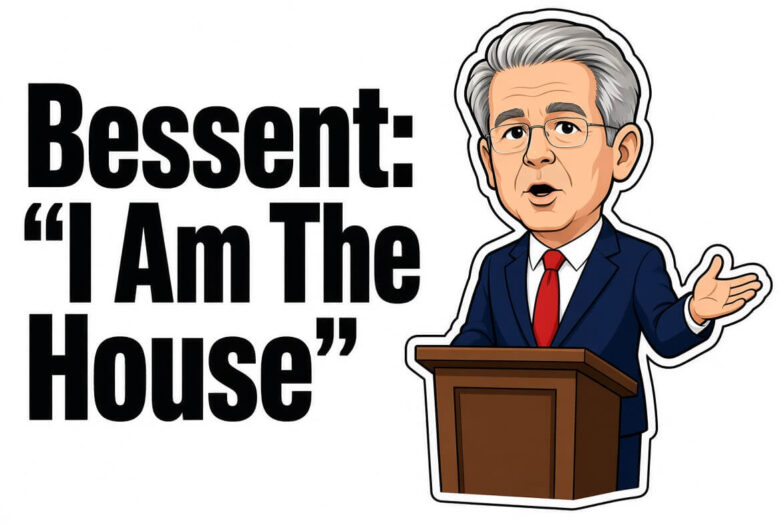
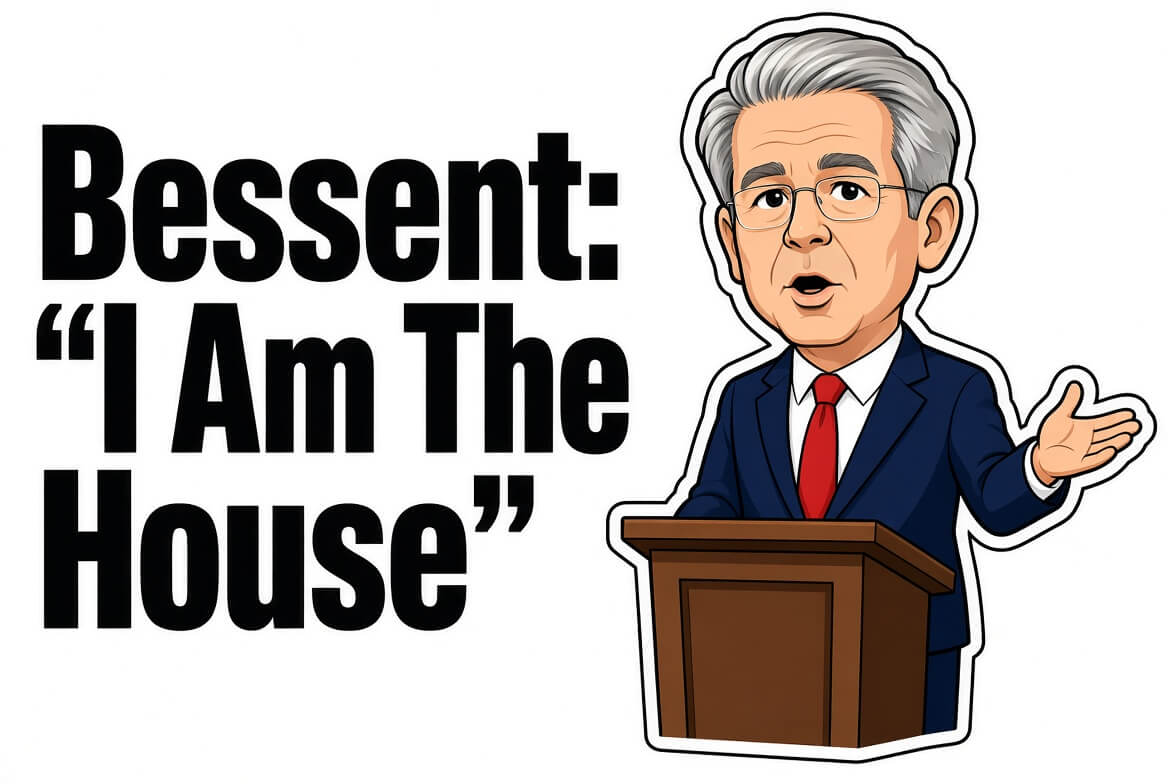
U.S. Treasury Secretary Scott Bessent told currency traders “I am the house now” on Tuesday. He dared them to bet against his campaign to prop up the Japanese yen. Speaking at Southern Methodist University in Texas, he claimed his coordination with Tokyo gives him inside knowledge of the Bank of Japan’s next moves. The catch: past efforts to lift the yen have faded fast, and traders are already skeptical.
Bessent Yen Comments: Key Takeaways
- “I am the house now”: Bessent challenged traders to bet against his push to strengthen the yen, claiming he has “asymmetric information” on BOJ policy
- First U.S. yen intervention since 1998: Washington and Tokyo ran a coordinated yen-buying operation on July 31, 2026
- Record ¥15.4 trillion (about $96.5 billion): Japan’s own intervention spending between July 30 and August 26, its largest month on record
- USD/JPY near 153.6 on September 9, well off the four-decade low near 164 that triggered the operation
- BOJ policy rate sits at 1%, with the next rate decision due September 17 to 18, 2026
- Higher U.S. rates are the risk Bessent flagged: a “disorderly” yen could push up Treasury yields, since Japan is the largest foreign holder of U.S. government debt
What Did Bessent Actually Say About the Yen?
At an SMU event on Tuesday, Bessent leaned into his reputation as a former hedge fund manager who made his name on big currency bets. Critics say a Treasury secretary takes a risk by wading into markets. Bessent argued they miss the point, because he now trades with an edge no private investor has.
“I am the house now,” Bessent said. He explained that when the U.S. intervenes in the yen, he has a strong read on what the BOJ and Japanese policymakers will do next. Then he threw down the gauntlet: bet against him if you want.
The comments rank among his most direct yet in a months-long effort to steer the yen higher. Bessent has worked closely with Japan’s finance minister, Satsuki Katayama, and has nudged the BOJ toward raising interest rates. A rate hike would support the yen and ease Japan’s need to sell its huge pile of U.S. bonds.
Promoted: Have a Read on the Yen but Not the Capital to Trade It?
Big macro themes like a coordinated yen intervention are where prepared traders shine, if they have the funds to act. FundedNext gives disciplined traders simulated accounts up to $200K, with no artificial time limits on challenges. You even earn a 15% profit share during evaluation. Once funded, you keep up to a 95% profit split with guaranteed 24-hour payouts, and you can trade through major news events. Join over 400K traders who have received $300M+ in payouts.
Learn More About FundedNext! Limited time offer: Use code BP for discounts on both CFD & Futures plans! T&C apply.
Disclosure: We may earn a commission from our partners if you sign up through our links, at no extra cost to you.
Why Is the U.S. Trying to Prop Up the Yen?
Here’s the part that surprises new traders: the U.S. almost never intervenes to support another country’s currency. The last time Washington bought yen was 1998, during the Asian financial crisis. So why now?
The yen had slid to roughly 164 per dollar, its weakest in four decades. A currency this cheap sounds like Japan’s problem, but the trouble spreads. A weak yen makes other Asian currencies look overpriced, which can spark a chain of competitive devaluations across the region.
There’s a more direct reason too. Japan holds more U.S. Treasuries than any other foreign country. If Tokyo had to defend the yen alone, it might sell some of those bonds to raise cash. That selling would push U.S. bond yields up and, in turn, lift borrowing costs for American households and businesses. Bessent has warned that a “disorderly” yen could feed straight through to higher U.S. interest rates.
To run the July operation, the Treasury sold euros from its reserves and used the proceeds to buy yen. Bessent assured European officials the euro sale was simply a reshuffle of reserves, not a signal about the euro itself.
Will Talking the Yen Up Actually Work?
Short answer: history says talk and intervention rarely hold on their own.
Currency intervention means a government or central bank buying or selling its currency to move the exchange rate. It can shock the market and force a quick move. But the effect tends to fade unless the country’s underlying policy backs it up.
The yen proved the point. The July operation briefly pushed USD/JPY toward 155. Within weeks the pair drifted back above 160. The same old pressures returned: rising oil prices, Japan’s budget deficits, and a wide rate gap between the two economies. Money flows toward higher yields, and Japan’s 1% policy rate still sits far below U.S. rates.
That gap is why traders stay doubtful. As rate differentials favor the dollar, the yen keeps facing gravity no matter how loudly officials talk. Market analysts note that without support from those rate differences, the boost from any intervention tends to be short-lived.
Promoted: The Strategy is Half the Battle; Your Mindset is the Rest.
Today’s news is driven by a Treasury secretary daring the market and a central bank about to move rates. But understanding the drivers isn’t enough if you lack the discipline to execute a plan on them. In “Unknown Market Wizards,” (4.6⭐ | 1,400+ reviews on Amazon) Jack Schwager interviews successful traders to reveal a common truth: their edge isn’t just knowledge or skills, it’s their psychological resilience and rigid risk control. Whether you’re navigating shifting geopolitical themes or top tier economic data, learn how the “wizards” stay clinical when the rest of the market is emotional.
Master Your Trading Mindset with Unknown Market Wizards!
Disclosure: We may earn a commission from our partners if you sign up through our links, at no extra cost to you.
What Does This Mean for the Bank of Japan?
All eyes now turn to the BOJ meeting on September 17 to 18. The bank held its policy rate at 1% on July 31 but spent the following weeks signaling that more hikes could be coming. Recent data has strengthened the hawkish case: Japanese wages rose at their fastest pace since 1997, and inflation has been running near 1.9%.
Bessent has said he expects BOJ Governor Kazuo Ueda to “do the right thing” on policy. That’s the crux of his confidence. If the BOJ raises rates, the yen strengthens on its own, and Bessent’s “house” bet pays off. If the BOJ holds and stays cautious, his verbal push loses its most important backstop.
A higher BOJ rate narrows the gap with U.S. rates. That makes holding yen more attractive and takes pressure off the currency, which is exactly the outcome Washington wants.
What Does the Bessent Yen Push Mean for Forex Traders?
For anyone trading USD/JPY, the setup is unusually loaded heading into the BOJ decision. You have a Treasury secretary openly steering the pair and a record run of Japanese intervention. On top of that sits a rate meeting that could confirm or kill the whole thesis in one afternoon.
Bessent’s warning cuts both ways. If you short the yen (bet it falls further) and the BOJ hikes, you could get squeezed as the currency jumps. But if the BOJ disappoints and the rate gap stays wide, the yen’s long-running weakness could reassert itself. No speech can hold it back forever.
The lesson for developing traders: when officials start talking this loudly, volatility usually follows. Position sizes matter more than usual, and the calendar around September 17 to 18 deserves your full attention. This is a pair where fundamentals and headlines are pulling in opposite directions.
Bessent’s “I am the house now” line is really a bet on central bank policy, and that’s exactly where a lot of new traders get lost. Understanding how coordinated intervention works, and why it fades without rate support, separates traders who react to headlines from those who read them. Premium members can dig into our lesson:
Geopolitical Risk, Trade Policy, and Safe Haven Flows
It walks through how policy moves and safe-haven flows drive currencies, why intervention works only when fundamentals cooperate, and how to position around events like a BOJ decision. Not a Premium subscriber yet? Subscribe to BabyPips Premium and learn to trade the consequences before the crowd catches on.
Frequently Asked Questions About Bessent’s Yen Comments
What did Bessent mean by “I am the house now”?
Bessent meant that when he intervenes in the yen, he holds better information than private traders. Think of how a casino keeps the edge over gamblers. He claims close coordination with Japan reveals the Bank of Japan’s next steps, so betting against him is a losing proposition in his opinion.
Why does the U.S. care about the Japanese yen?
Japan is the largest foreign holder of U.S. Treasury bonds. If a weak yen forced Japan to sell those bonds, U.S. interest rates could rise. A weak yen can also pressure other Asian currencies, creating wider instability that eventually reaches U.S. markets.
What is currency intervention?
Currency intervention is when a government or central bank buys or sells currency to influence its exchange rate. In this case, the U.S. and Japan bought yen to push its value up. Intervention can move the market quickly, but the effect often fades unless policy and fundamentals back it up.
Why does the yen keep weakening despite intervention?
The main driver is the wide gap between Japanese and U.S. interest rates. With Japan’s rate at 1% and U.S. rates much higher, money flows toward the dollar for better returns. Rising oil prices and Japan’s budget deficits add to the pressure.
What happens next for the yen?
The Bank of Japan’s rate decision on September 17 to 18, 2026 is the key event. A rate hike would support the yen and validate Bessent’s stance. A hold could undermine his verbal push and let the yen’s weakness return, setting up sharp moves in USD/JPY either way.
Bessent’s claim that he can prop up the yen with coordinated intervention sounds bold, but the article reveals why that’s harder than officials want to admit. Premium members can read our lesson:
📖 Currency Intervention: When Central Banks Enter the Market
Reading this helps you understand what currency intervention actually is, why it works only when fundamentals cooperate, and how to spot when intervention is losing its grip against the underlying pressure of interest rate differentials.
And if you’re not a Premium subscriber yet, consider joining today to access this lesson and dozens more that break down the policy moves and central bank decisions shaping currency markets.
With Babypips Premium, you get full access to School of Pipsology lessons that help you understand not just what officials are saying, but why the market keeps ignoring them when the fundamentals don’t align